
Winning Pickleball is Math
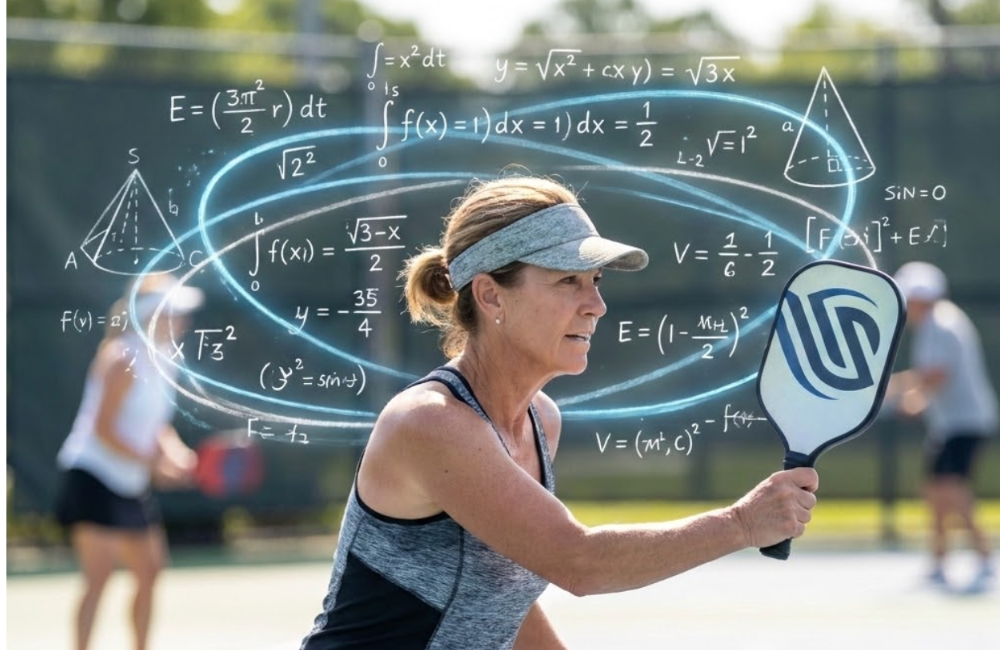
Pickleball is math, whether you like it or not. Every overhead and dink is a probability problem in disguise: do you swing for the moon and hope the numbers land your way, or do you play the smaller, safer percentage that stacks advantages over a few volleys? We were playing against Tom the other day. He’s a good player, but when he sees a “green light”, he swings with all he’s got. But it’s 50/50, winner or loser. Let’s run a tiny, friendly thought experiment at the kitchen.
Scenario: you get an easy playable ball, nice height, not a pop‑up but a real opportunity. Option A: go for the “100% power” putaway. In reality, that means you hit with full force, and let’s say there’s a 50% chance you make a clean winner and a 50% chance you mis‑hit it into net or long. So your chance of immediately winning the point = 0.5, and losing it = 0.5.
Option B: play a measured winner, say 70% power. This lowers your immediate chance of an outright winner, but it’s much safer. Suppose you now have a 90% chance the ball stays in play (10% chance fault), and if it’s returned, there’s a 70% chance the opponent produces a weak reply that you can finish on the next shot. What’s the math?
Chance of fault:
Option A: immediate loss = 50%. No second chances.
Option B: immediate fault/loss = 10%. Even if the opponent gets the ball back solidly (20% of returns), you may still be in a playable rally. Next hit? 10% again. You’d have to miss five chances to have the same odds of losing as that one big swing.
So comparing outcomes: Option A gives you a 50% shot at instant victory but a 50% chance of immediate defeat. Option B gives you a strong chance of a favorable position on the next ball and only a 10% immediate loss. If the follow‑up putaway after a weak return is reliable for you, Option B’s expected probability of ultimately winning the point is higher.
That’s the math: you’re comparing a single high‑variance bet versus a lower‑variance sequence that compounds advantages. High variance can be thrilling, and sometimes spectacular winners are exactly the right play (score, momentum, or timeout pressure). But over the long run—across dozens of points, a safer, percentage play that creates extra opportunities wins more points.
Practical takeaway: ask yourself three quick things before you smash, what’s my real chance of a clean winner, what’s the chance of fault, and if the ball is returned, how likely is the opponent’s reply to be attackable? If the numbers favor a set‑up shot, take the percentage play. Your opponents will thank you later, by giving you one more gift of a weak return you can actually enjoy finishing.