
What Every Pickleballer Over 50 Should Know About Muscle Loss
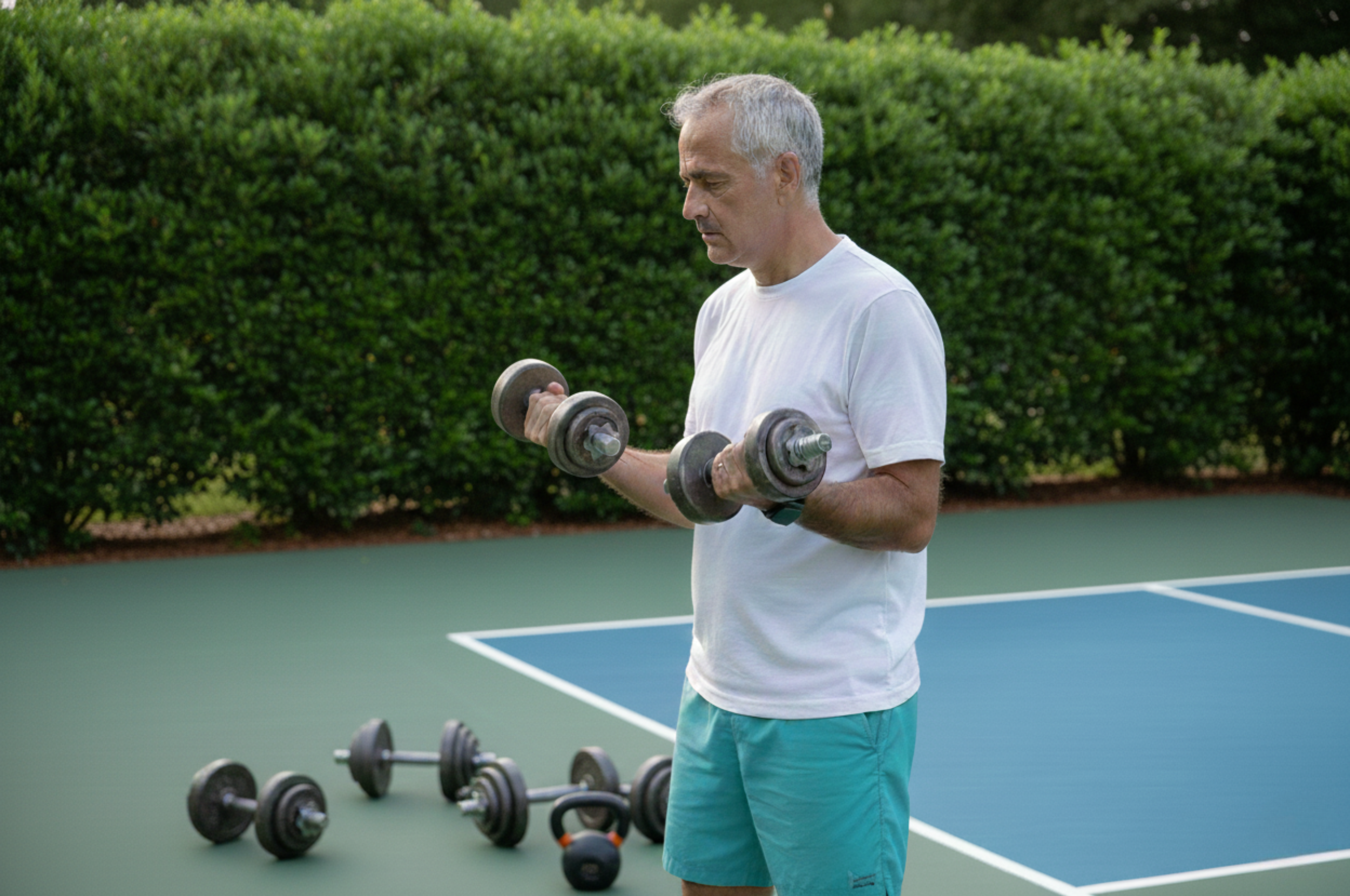
The science of muscle loss, and the smart ways to fight back
As regular readers know, Joyce and I like to work out almost as much as we like pickleball. Once you pass 50, your muscles aren’t conspiring against you, but they will happily shrink if you leave them alone. Muscle loss, sarcopenia, actually starts sneaking in during your 30s and accelerates after 50. The good news, it’s not destiny. With a little planning and a few honest workouts, you can keep your strength, speed, and dignity intact.
Why it matters for pickleball
Less muscle equals slower reactions, weaker drives, and a higher chance of trips, falls, and those embarrassing mid‑match pauses while you contemplate life choices. Muscle fuels explosive lateral movement, stabilizes joints, and absorbs shock. Lose it and every dink feels harder.
The biology, short version
As we age we produce fewer anabolic hormones, muscle protein synthesis becomes less efficient, and inflammation creeps up. Also: being sedentary is like sending a “leave me” text to your fast‑twitch fibers. But muscle adapts. Stimulus + fuel + recovery = gain. Yes, even after 50, 60, even 70!
What actually works
Lift things, on purpose. Resistance training is the single most powerful countermeasure. Aim for 2–3 sessions a week focusing on compound moves: squats, deadlifts (or hip hinges), rows, lunges, and pressing patterns. You don’t need to be a gym hero, goblet squats, kettlebell swings, and resistance bands work fine.
Prioritize power. Pickleball favors quick bursts. Add light, fast movements (medicine ball throws, kettlebell swings, or short plyometrics like jumping and hopping) once or twice weekly to train speed.
Protein matters. Target roughly 1.6–2.2 g/kg bodyweight daily, and try 25–40 g of protein per meal to stimulate muscle protein synthesis. Leucine‑rich foods (dairy, eggs, lean meat) help.
Creatine is not just for bros. It’s just as safe for older adults, and supports strength, power, and recovery, useful for court performance.
Maintain vitamin D and address deficiencies. Low D links to weakness and falls. Check levels and supplement if needed.
Move more, sit less. Regular walking, balance drills, and short mobility sessions protect gains and reduce injury risk.
Sleep and stress: muscle grows when you’re not on your phone. Prioritize sleep and manage chronic stress.
Practical starter plan
Two‑day mini plan: Day A—goblet squat, bent‑over row, Romanian deadlift, plank. Day B—reverse lunge, shoulder press, single‑leg RDL, farmer carry. Do 2–3 sets of 6–12 reps. Add a power movement (e.g., medicine ball chest pass) once per week.
Final serve
Muscle loss is annoying but beatable. Don’t wait to be reactive, be proactive. A little resistance training, smart protein, and consistent movement will keep you quick, stable, and annoying to younger opponents. You’ve still got plenty of court time left, use it.
Start small and be consistent: track your lifts, celebrate tiny wins, and don’t be ashamed to ask for help. A coach or physical therapist can tailor exercises around past injuries. Remember, reclaiming strength is slow but cumulative. In months you’ll notice faster recovery, sharper shots, and fewer trips to the physio.
