
How Low Can You Go?
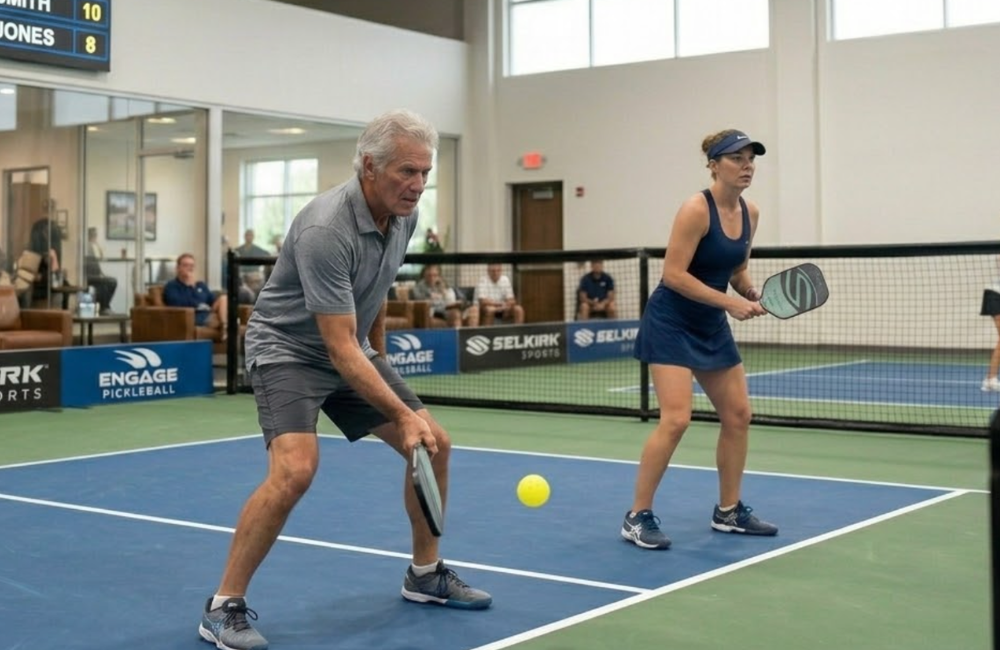
Getting low is one of those simple things that instantly makes your pickleball play smarter. It’s not glamorous, no dramatic dives or highlight reels required, but bending your knees and dropping your center of gravity pays off in control, speed, and fewer “oops” moments. Here’s how lowering your stance upgrades practically every part of your game.
Why lower is better
A low stance gives you a stronger base. We had the opportunity to play with an APP Pro a while back, and her mantra was “Stable base”. Getting low is the key. When your knees are bent and your weight is centered over the midfoot, you can absorb pace, redirect balls, and recover faster. That shortens reaction time and keeps your hands quiet, which is exactly what you want at the kitchen line. Low equals balance, and balance equals fewer surprise flings and more clean placements.
Better stability and control
Standing tall makes you top heavy. A low posture lets your legs do the work so your arm can stay soft and precise. That means cleaner dinks, steadier blocks, and more reliable third‑shot drops. You’ll also find it easier to punch volleys with a compact motion because your core and hips are engaged.
Faster first steps
A crouched athlete is ready to explode. The split step becomes meaningful when you’re already slightly bent, you turn that small rebound into a decisive lateral or forward step. That extra quickness is the difference between getting to a ball and watching it land where you used to stand.
How to train to get lower
Start with mobility and strength. Deep bodyweight squats, hip mobility drills, and ankle flexibility help you hold a lower posture without strain. Add ladder drills and short lateral shuffles to make low movement feel natural. On court, practice a “low hold” at the kitchen during warmups, stay low for 30 seconds and dink steadily. Build time gradually.
Common mistakes and how to fix them
Bent at the waist, not knees: hinge from the hips but bend the knees first.
Too wide or too narrow stance: find shoulder width plus a step for stability.
Stiff arms: keep the grip relaxed so the wrists can absorb pace.
Final tip
Don’t overdo it. Being low when you should stand taller (serves, drives) wastes energy. The goal is smart lowering, get low for kitchen play and quick resets. Keep in mind the see-saw, when their paddle goes up, yours goes low. Practice the posture until it’s boring. Then watch how much more you start to control the court.