
Hit Overheads Like a Pro
We’ve all been there, your opponent lofts one up…you raise your paddle anticipating the crushing blow…and you smash the overhead…into the net. Just this past weekend I was on the other side of this, I’d already turned my back, given up because I knew the pop up was so juicy for them. I heard the smack of the paddle, but didn’t see it…it went right into the net.
OK, so how do we avoid being on the wrong end of this equation?
The key to a reliable overhead is not brute force but consistency, a repeatable setup, the right contact point, and timing that comes from good footwork. Here is a compact plan to make your overhead dependable.
Start with the setup and contact point. Get behind the ball early and plant with a stable base, feet shoulder width, knees slightly bent, weight on the midfoot. Aim to meet the ball slightly in front of your lead shoulder at full reach so you can drive it down into the court rather than out. Keep your eyes on the ball until contact, tracking the ball’s tail is how late hits happen.
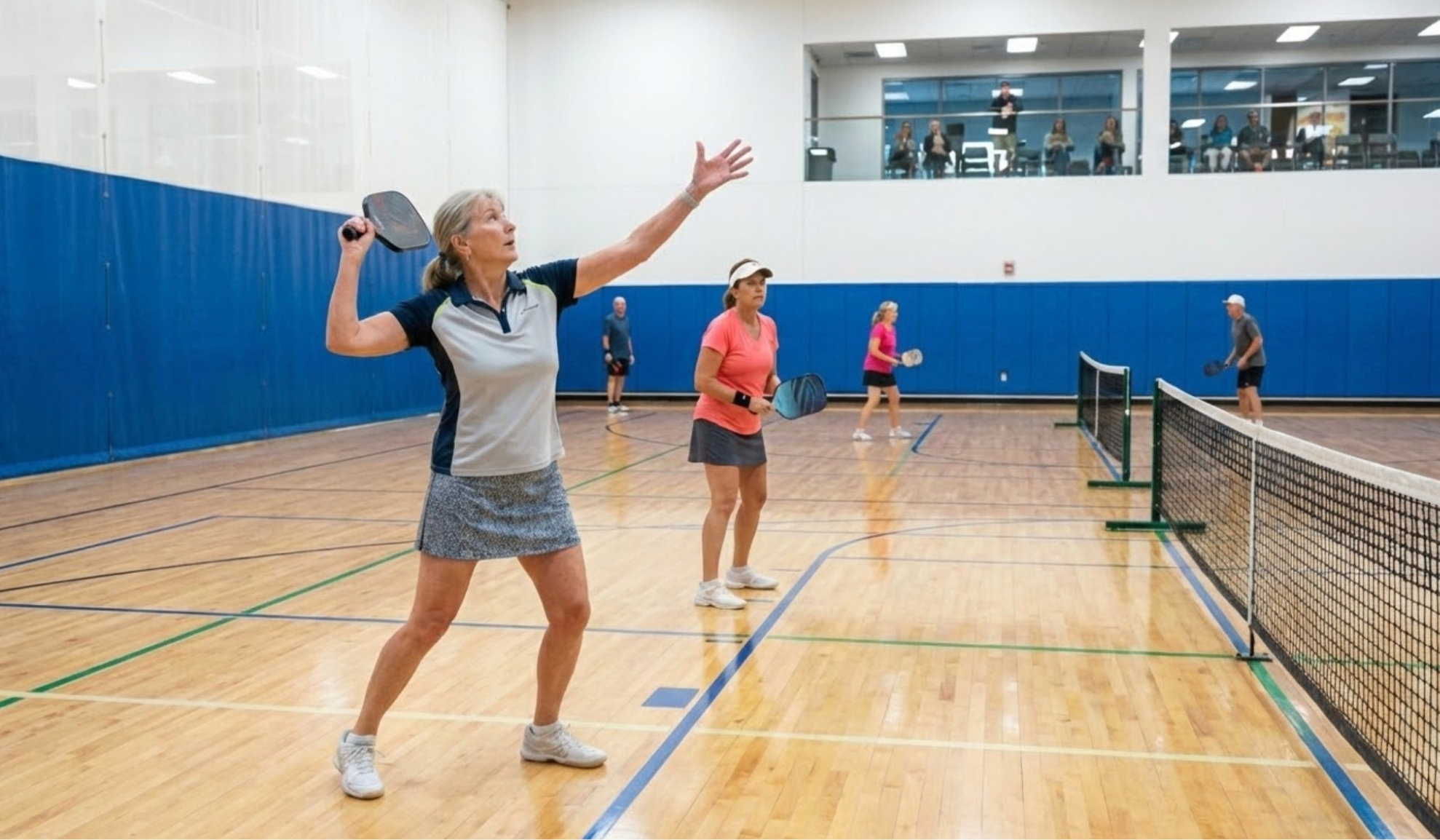
Build a compact, repeatable swing. Use a trophy position, non‑hitting arm up, pointing at the ball (it may feel goofy, but winning the point will feel better), hitting elbow back, to create the same launch posture every rep. Keep the swing short and efficient, with a firm wrist on contact to help control the face and reduce errors. Power should come from the ground up, time a small step or come up on tip-toes into contact, drive through your legs, and rotate the hips. If you reach because your feet are late you will mistime the strike. If you linger you will hit into the net.
Practice for margin, not flash. It is smarter to take a slightly conservative angle that clears the net with depth than to swing for a highlight and send it long. Target depth over pure pace. That predictability wins more points and keeps you calm under pressure.
Once you do get more consistent, then work on angles. At low intermediate levels, a hard smash is usually all it takes to win the point. At high intermediate and above, your opponents can get those shots back, you’ll need to make them harder by moving them around by angling your overheads.
Two simple drills to lock it in. Have a partner feed lobs while you aim for a taped target on the opposite court, run sets of ten and keep the same mechanics each rep. For solo work practice the motion against a wall, focusing on contact point and a downward trajectory. Gradually speed up the feeds to simulate pressure.
Fix the common errors. If you are late, improve footwork rather than force the arm. If your elbow flares, tighten the arc to control the face. If your wrist flicks at the last second, shorten the swing and lead with the forearm. And if you know you are late and a hard smash is 50/50 at best, just punch it back to them, better to keep the rally going than make an error.
Final thought, repeated boring reps make the overhead reliable. Prioritize setup, timing, and small disciplined swings. Do that and your overhead will turn from a risky gamble into a routine finisher.