
Anti‑Inflammatory Tips and Foods for Better Pickleball
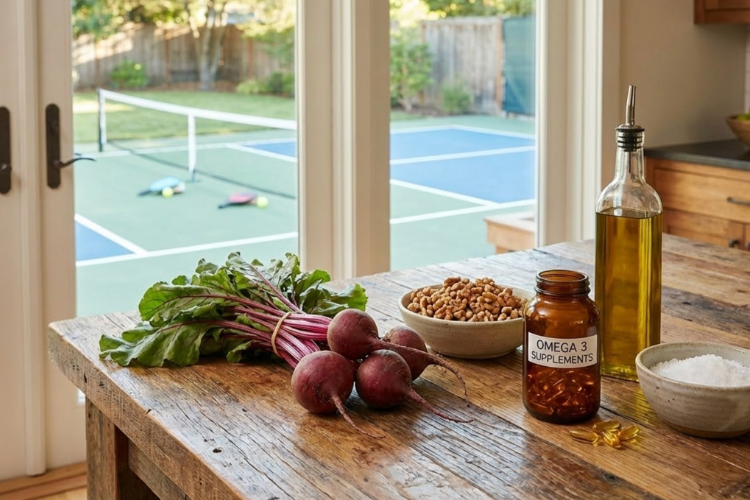
Want less creak and more spring in your step on and off the court? An anti‑inflammatory eating approach can help, steady energy, quicker recovery, and fewer achy mornings, without turning your life into a kale-only bootcamp. Here’s a practical, general guide to eating for better health and better pickleball.
Focus on the good fats
Omega‑3s fight inflammation. Eat fatty fish (salmon, mackerel, sardines) a few times a week or use algae/fish‑oil supplements if you’re plant‑based.
Nuts and seeds (walnuts, chia, flax) are easy snacks that add anti‑inflammatory punch.
Pile on colorful plants
Bright fruits and vegetables are full of antioxidants. Berries, cherries, leafy greens, bell peppers, and beets reduce oxidative stress and support recovery.
Nitrate‑rich greens like arugula, spinach, and beets can also help blood flow, handy for court endurance.
Use spices that help
Turmeric (with black pepper) and ginger are kitchen heroes. Add turmeric to dressings, smoothies, or golden milk; toss ginger into stir‑fries and marinades for inflammation-fighting flavor.
Choose smart carbs and lean proteins
Favor whole grains, beans, and starchy veg for steady fuel that won’t spike then crash your energy.
Lean protein, fish, poultry, legumes, or tofu, supports muscle repair after matches and workouts.
Mind the timing
Eat a balanced snack 60–90 minutes before play: banana + nut butter, a small yogurt, or a whole‑grain toast with avocado, easy fuel without stomach drama.
After play, prioritize protein + carbs within 30–90 minutes (smoothie, chocolate milk, turkey sandwich) to kick-start recovery.
Hydration & alcohol
Sip water consistently; add electrolyte mixes for long sessions or hot days.
Alcohol increases inflammation and disrupts recovery, enjoy socially but avoid heavy drinking especially around intense play days.
Practical swaps & habits
Swap sugary sports drinks for homemade electrolyte water (water + pinch of salt + citrus) or diluted beet juice for a nitrate boost.
Replace processed snacks with nuts, fruit, or whole‑grain crackers and hummus.
Keep easy staples on hand: canned wild salmon, frozen berries, pre-washed greens, and hard‑boiled eggs.
Supplements (if needed)
Consider omega‑3s, vitamin D, and tart cherry concentrate for sleep and sore‑muscle recovery, talk with your healthcare provider before starting anything new.
Lifestyle matters too
Combine anti‑inflammatory eating with sleep, mobility work, and targeted strength training (glutes, hips, core) for the biggest payoff.
Bottom line: aim for mostly whole foods, color on your plate, smart timing around play, and a few anti‑inflammatory staples. It’s not about perfection, just enough good choices to keep you moving, recovering, and enjoying more rallies (and fewer hobble-off-the-court moments).