
Zip the Gripe, Lift Your Partner: Self & Partner Talk That Wins Matches
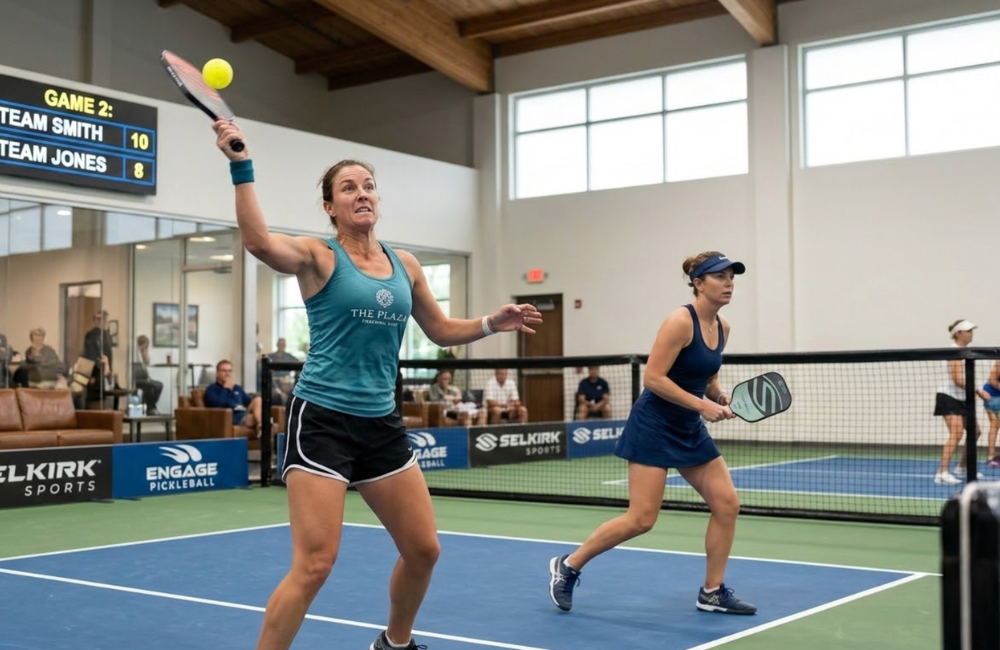
I was playing with someone the other day who was having an off day. His self talk (out loud), was really negative. It was a close match, which we lost, and I was finding it hard to stay positive with their words bouncing around my head. How can we improve our own talk, and lift our partner as well?
Self‑talk is the invisible soundtrack of your match, and it matters. What you say to yourself after a missed dink or a sloppy return doesn’t just live in your head; it leaks out in tone, body language, and timing. That little muttered curse or zero‑confidence sigh can slow your reaction, stiffen your hands, and quietly pull your partner’s confidence into the gutter. Be a better partner by policing your inner monologue, and your outer one.
Why words (and tone) matter
Pickleball is half mechanics, half mood and decision making. Hearing a teammate call themselves “so bad” after one mistake does two things: it signals resignation to you, and it invites opponents to keep applying pressure. Conversely, a calm, constructive line, “reset, we got this”, keeps the team present and resilient. Your partner reads your voice and posture faster than you think.
Common self‑talk traps
Catastrophic wording: “I always mess this up” makes it feel true.
Performance commentary: “Don’t hit it long” said as a panicked whisper makes your hands tight. Instead, frame it in the positive: “Hit it just inside the baseline”.
Blame without solution: “I never get to hit their pop ups” turns a momentary gap into a mental divorce.
Quick fixes you can use immediately
Swap language: replace “I’m terrible” with “One point at a time.” Same sentiment, less surrender.
Use micro‑cues instead of critiques: “Breathe” or “Relax the grip” are short, actionable, and calming.
Name it neutrally: “That was messy” > “I blew that.” Neutral tone reduces drama.
Becoming a partner who builds confidence
Coach in private, support in public: If you have feedback, give it between games not mid‑rally. Make corrections short and tactical, not personal.
Share a ritual: agree on a one‑line reset after bad points, “New point”, and use it. Rituals cut drama and anchor focus.
Mirror positive body language: stand tall, nod, and get to position quickly. Your movement tells your partner you’re ready.
Practice the mindset away from competition
Rehearse resilience phrases: write two lines on your phone and read them before a match.
Post‑game review: pick one improvement and one win to discuss—keeps feedback balanced.
Drill under pressure: practice 3‑ball dinking where you must say a calm cue after each miss, train the habit.
Final thought
Being a good partner isn’t only about the shots you make, it’s about the atmosphere you bring. Choose a soundtrack that steadies, not sabotages. Say kinder things, give quick, constructive cues, and watch both your game and your partner’s play get better. Besides, teams that laugh more usually win more. So be kind to your words, and to the teammate beside you.