
Your Own Backyard Pickleball Court: Dream or Drama?
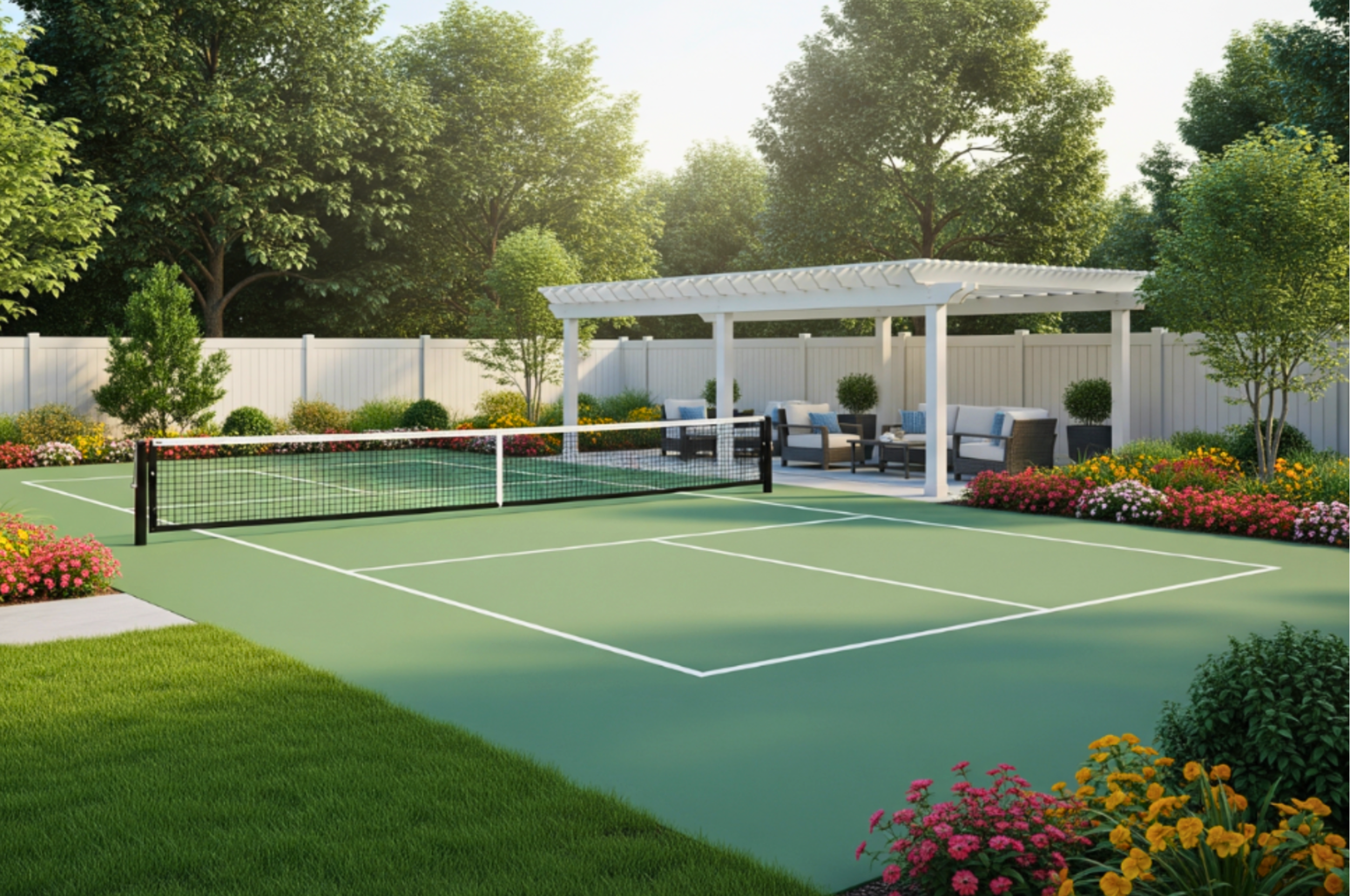
The upside, downside, and everything in between
It sounds like a fantasy straight out of a pickleball lover’s daydream: wake up, pour your coffee, slip into your court shoes, and within minutes you’re playing a few practice dinks in your own backyard. No waiting for courts, no open-play chaos, no commute. Just you, your paddle, and the net, steps from your back door.
Every now and then I play at my friend Matt’s house. He’ll round up 4-6 guys for a boys night, or a few couples for some mixed. It’s great and I appreciate it. But it’s a lot of work for him to put together. That’s just one side of it.
For many players, the idea of a private court feels like the ultimate luxury. And in some cases, it is. A backyard court means freedom—play whenever you want, for as long as you want, with whomever you want. Morning drills before work? Easy. Friends over for wine and doubles under the lights? Done. It quickly becomes more than a court; it’s a social hub, a fitness tool, and, frankly, a bit of a bragging right.
But as with any dream, the reality is often more complicated. A backyard court isn’t just lines and a net—it’s a major project that requires space, money, and ongoing upkeep. A proper court build usually starts in the $25,000 range and can easily double once you add fencing, lighting, and cushioned surfacing. That’s a serious investment, especially when you compare it to a club membership or the free courts popping up in local parks.
Then there’s the question of space. Regulation courts run about 30 by 60 feet, which is bigger than many suburban backyards allow. Even if you do have the room, you’ll be sacrificing lawn, garden, or pool area to make it happen. For some, that’s an easy trade-off. For others, it means waving goodbye to landscaping they actually enjoy.
And let’s talk about noise. The cheerful pop-pop-pop of pickleball is music to players’ ears, but neighbors don’t always share that enthusiasm. Across the country, disputes over the sound of pickleball courts—backyard and otherwise—have erupted into lawsuits, HOA battles, and more than a few strained relationships. Before you start laying down asphalt, it’s worth considering not just your own love of the game but also how close your neighbors are and how they’re likely to react.
Maintenance is another reality check. Courts don’t stay perfect forever. Leaves, snow, rain, and heat all take their toll, leading to cracks, fading lines, and slippery surfaces. Resurfacing and upkeep aren’t one-and-done expenses; they’re part of the long-term commitment.
Of course, not everyone has to go all-in. Some families opt for a half-court set-up for drilling and dinking. Others go the portable route, with rollaway nets and taped lines in a driveway or cul-de-sac. These options deliver much of the convenience without the permanence—or the price tag.
So, is it worth it? For the dedicated player with the budget, space, and patience, the answer is often yes. A backyard court can transform daily life, turning your home into a mini-clubhouse for friends and family. For others, though, it’s a project that looks far better on Instagram than in practice—expensive, noisy, and underused.
In the end, the dream of a backyard pickleball court can absolutely be real, but it’s one best pursued with both eyes open. If you’re ready for the costs, the responsibilities, and yes, maybe even a little neighbor drama, then go ahead—build your slice of pickleball paradise. If not, don’t worry. The local courts will still be there, and you’ll still get your fix of the pop-pop-pop you love.
