
Why You Keep Popping the Ball Up (And the Simple Fix)
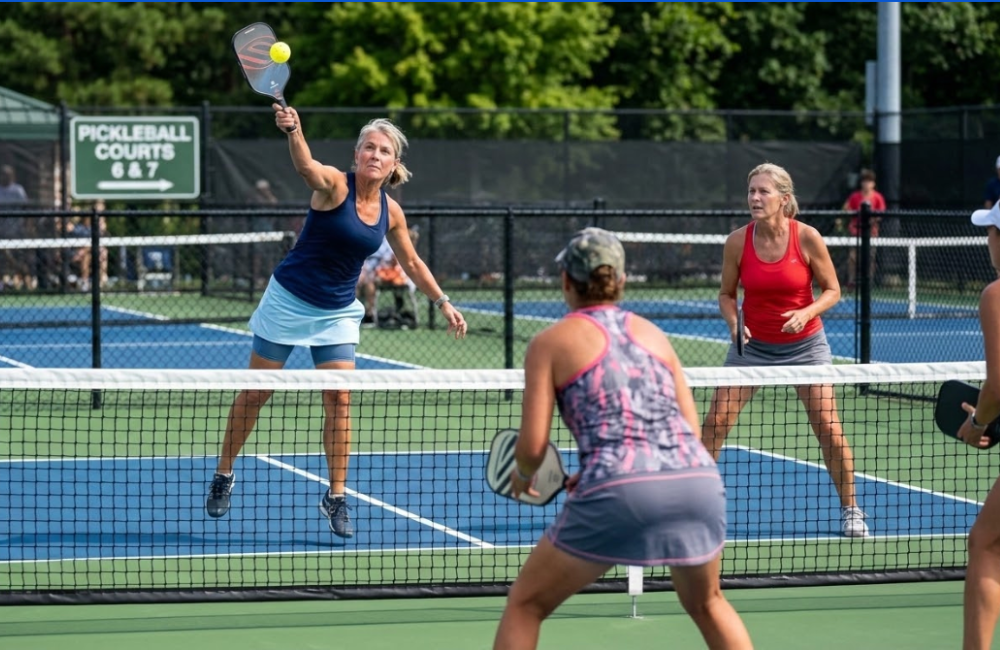
One of the fastest ways to lose a pickleball point is the accidental pop-up. You know the one: a comfortable dink or reset suddenly floats a little too high, your opponents light up, and three milliseconds later the ball is flying towards your left foot.
Most players assume they’re popping the ball up because they need “softer hands.” Sometimes that’s true. But more often, the real problem is much simpler: your paddle face is too open at contact.
That tiny paddle angle changes everything.
When the paddle face points upward, even slightly, the ball lifts. Add a little tension, a little extra swing, or a ball contacted too far out in front, and suddenly you’ve created the exact shot your opponents were hoping for.
The fix is surprisingly small.
Instead of thinking “lift the ball over the net,” think “push the ball forward with a slightly closed paddle face.” Not dramatically closed. Just enough that the paddle face is more vertical than skyward.
For dinks and resets, imagine you’re guiding the ball low over the net rather than helping it upward.
Another major cause of pop-ups: trying to swing too much from the wrist. Bigger swings create more timing issues and more unwanted lift. Better players tend to use compact movements with the paddle out in front, the wrist relatively stable and the swing controlled by the shoulder.
A good checkpoint is this: if your follow-through finishes high near your shoulder on soft shots, there’s a decent chance you’re adding unnecessary lift.
Footwork matters too. Many pop-ups happen because players reach instead of moving their feet. When you’re stretched or leaning backward, the paddle naturally opens and the ball rises. Getting balanced before contact instantly improves ball control.
Here’s a simple drill that works surprisingly well: during warm-ups, try to hit ten straight dinks where the ball clears the net by no more than a foot to 18 inches. Don’t worry about winning the dink exchange. Focus entirely on trajectory. Low and controlled.
Most players are shocked by how much concentration that takes at first.
The encouraging part is that pop-ups are usually not a “talent” issue. They’re a mechanics issue. Small adjustments to paddle angle, swing size, and balance can clean them up quickly.
And once you stop feeding attackable balls to your opponents, the game slows down in a good way. You feel calmer at the kitchen line. Points get longer. Your resets improve. Your confidence improves.
The best part? Often the difference between a pop-up and a great soft shot often is often just a few degrees of paddle angle.
