
Warm Up Like This to Actually Play Better
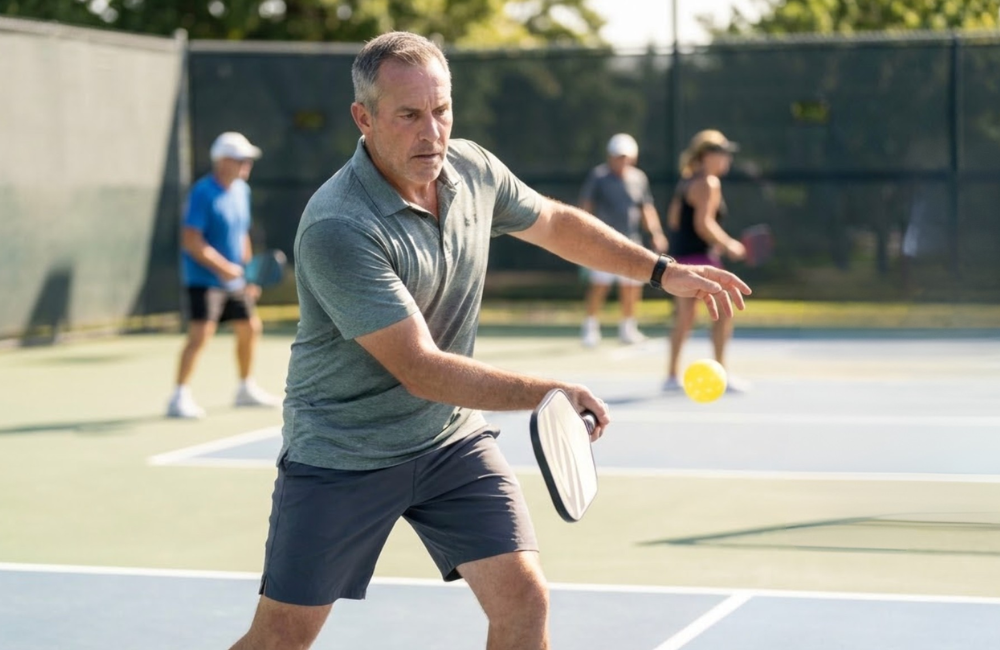
I know, we tend to pick on the typical warm up a lot, but hey, it matters. Forget the usual couple of minutes of straight ahead dinks, and then a couple more lazy ground strokes. To set yourself up to play better, warm up the moves and skills you’ll actually be using.
Treat your warm up like a focused rehearsal rather than a checklist. The idea is simple: practice the exact shots and movements you’ll use in the match, at the intensity you’ll use them, so your timing and footwork arrive already dialed.
Start with a brief wake‑up: a light jog around the court, arm swings, and a few hip and ankle mobilizers to feel loose. Then move into paddle‑specific work that mirrors match demands.
If you start off dinking straight ahead (as most people in open play do), don’t hit lazy high dinks, keep the ball low, 6” over the net. Then move your dinks around, hit to their backhand, forehand, backhand, etc. If you can, dink crosscourt, at game pace.
When you move to the backcourt, treat groundstrokes as serve return practice: aim deep to the baseline to buy time, then hit a few controlled drives at roughly 60 percent power, keeping the trajectory low and just over the net. Again, you are not just hitting back and forth, but dialing shots you are going to use.
Next, practice transition shots. From the baseline work a handful of third‑shot drops or soft approach shots, then step forward and hit compact transition volleys to simulate moving into the kitchen. If you are warming up with someone you don’t know well, don’t worry Finish with reaction work: quick block volleys from near the kitchen line to sharpen timing and reinforce a light, stable grip.
Throughout the sequence keep two rules: rehearse at match‑like intensity and be intentional about placement. Depth on returns, low controlled drives, soft third‑shot drops, and compact volleys are the shots that win points. Use a consistent breathing cue before your first serve and set one simple mental focus for the match, “quiet hands” or “target their backhand”, so your head is as ready as your body.
Ten concentrated minutes like this primes your nervous system, sharpens decision cues, and makes your opening rallies feel polished. Skip the generic jogging and practice what matters; you’ll notice the difference in those first three points.